





































Description
Before shipping containers became standard, goods were loaded onto ships by hand in crates, barrels and sacks, and loading a single vessel could take days. Earlier railway systems such as the Conflat container improved things, but those boxes could not be stacked. The ISO container first appeared in 1956, credited to American trucking owner Malcolm McLean: an all-steel box with reinforced corners that could be stacked and moved between ship, rail and road without handling the goods inside.
Today ISO containers dominate long-distance freight, and container trains are one of the busiest flows on Britain's railways, linking the deep-sea ports with inland terminals across the country.
Dapol's O gauge container range models the types most commonly seen in use today, with different door styles reproduced on the 20ft, 40ft and 40ft High Cube boxes to suit particular liveries. They make ideal loads for O gauge container wagons or detail for yards, docks and industrial scenes.
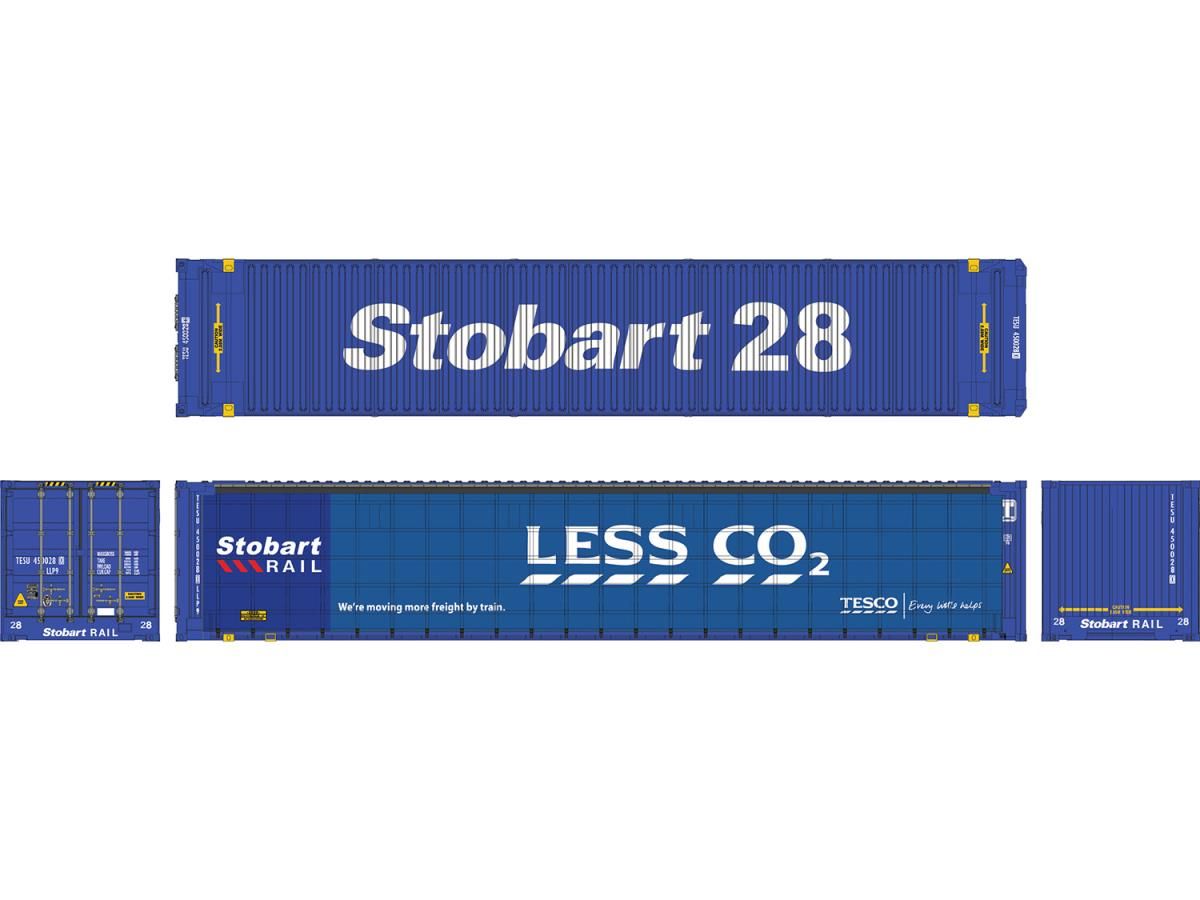
This model: a 45ft curtainside container in Tesco's 'less CO2' livery. Tesco has run dedicated container trains between its distribution centres for many years, moving goods by rail rather than road, and these curtainside boxes became a well known symbol of supermarket traffic on the network.
Features include:
• O gauge (7mm scale, 1:43.5)
• 45ft Curtainside Container
• Detailed moulded body
• Finely applied livery and markings
• Ideal as a wagon load or as scenery
In stock now at Rainbow Railways.