




















Description
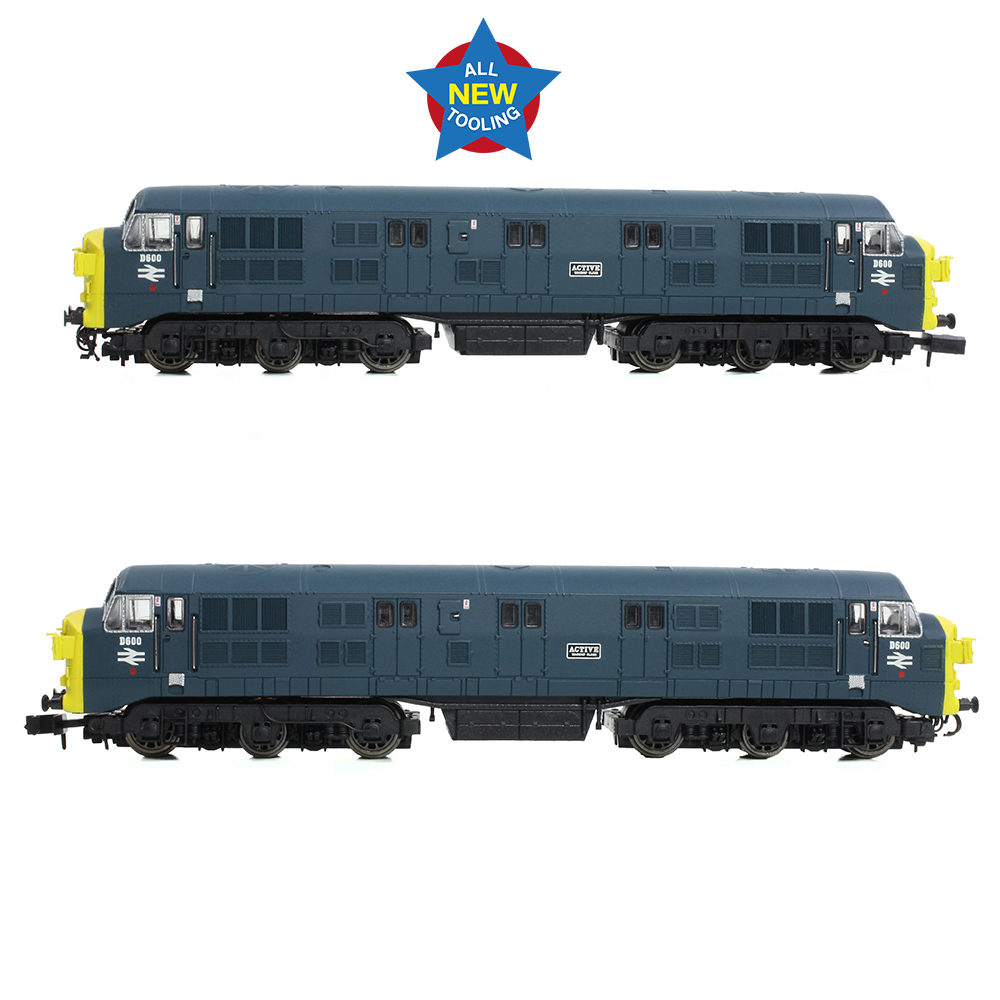
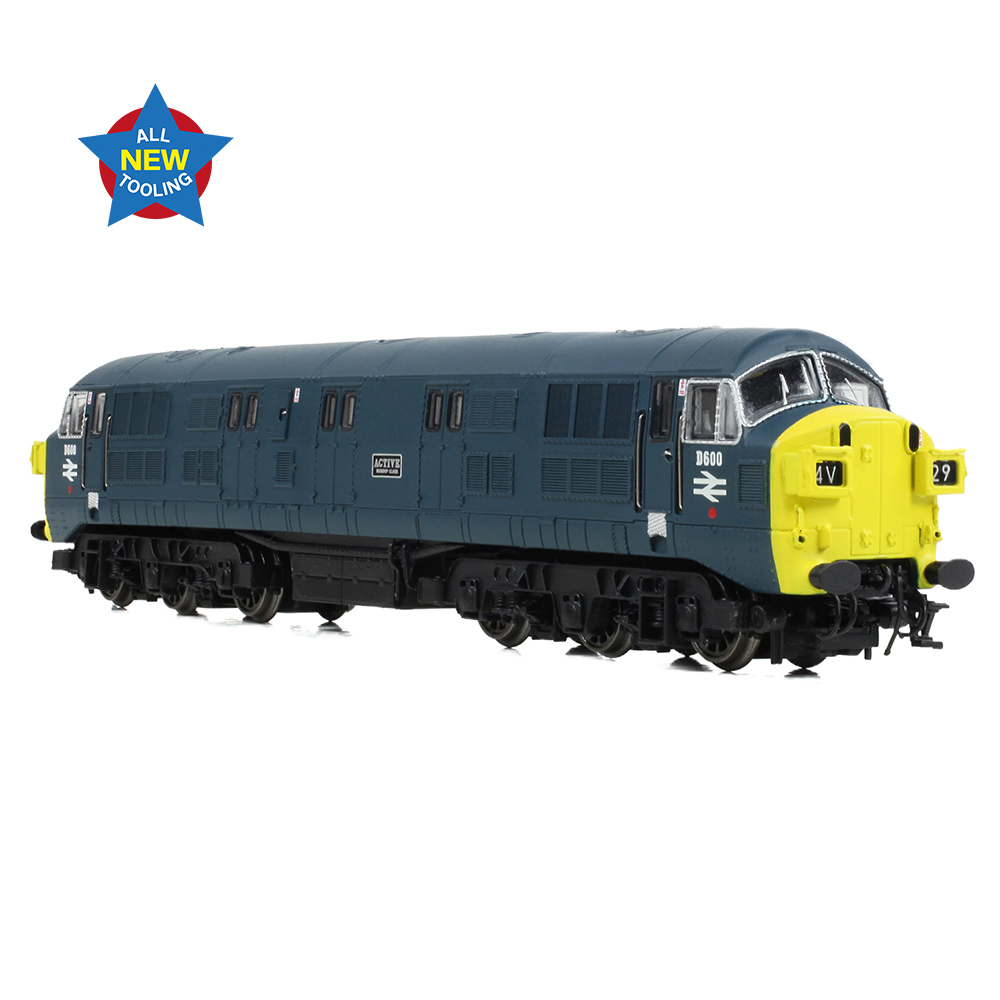
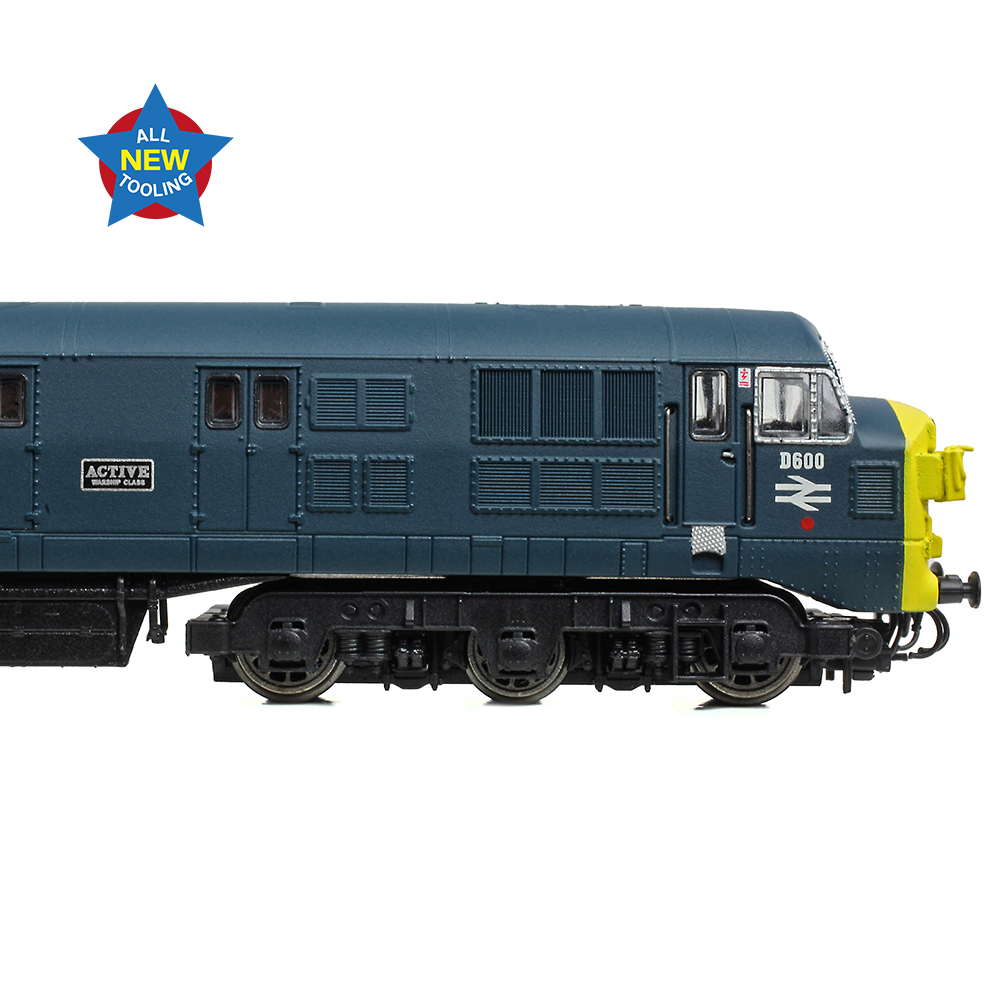
EFE Rail E84522 Class 41 'Warship' Headcode Box D600 'Active' BR Blue - N Gauge
The Class 41 ‘Warship’ locomotives (known originally as the D600s) were pioneers, being the first British mainline diesel-hydraulic locomotive and the first Type 4 diesel locomotive completed for BR when the class leader, No. D600, was delivered in late-1957. More than sixty years since the real locomotives first entered traffic, it is finally possible to enjoy N scale models of these western pioneers thanks to this new EFE Rail model.
A class of just five locomotives, not only did the Class 41s break new ground as the first Type 4 diesels built for BR, but in June 1958 No. D601 became the first diesel locomotive to haul the Cornish Riviera Express non-stop from Paddington to Plymouth. Complemented by many of the models found in the Graham Farish N scale range, from locomotives like the Castle Class steam locomotives and the Class 42 ‘Warships’, to the array of rolling stock suited to Western operations including Hawksworth and Mk1 Coaches, freight, and parcels stock, these new ‘Warships’ expand the Western options even further.
Developed from the rails up for Bachmann’s EFE Rail, the Class 41s employ a high fidelity bodyshell, with options to model the locomotives in their original form – with disc headcodes – or in later years when split headcode boxes were fitted in their place. The modified bodyside grilles can also be modelled, with their vertical vanes rather than the original horizontal vanes fitted to the main fan grilles at each end of the loco.
Powered by a coreless motor and with true A1A-A1A gearing, the EFE Rail model is a smooth and powerful performer. Directional lighting is fitted, along with cab lights which shine a spotlight on the detailed cab interiors. Switches are provided on the circuit board to allow analogue users to control both the cab and tail lights. When used on DCC, the directional lights can be controlled by DCC functions, with the ability to turn the tail lights off independently, and the cab lights too, using dedicated function buttons. The DCC interface is Next18 and space has been made available within the battery box moulding for anyone wishing to fit a speaker and add sound to their model.
Read more about the EFE Rail Class 41 ‘Warship’
- EFE Rail N Scale
- Era 6
- Pristine BR Blue livery
- Running No. D600
- Named ‘Active’
- Split Headcode Boxes
- Revised Bodyside Grilles
- Equipped with a Next18 DCC Decoder Socket – Recommend Decoder item No. 36-567A
- Length 235mm (over couplings)
EFE RAIL D600 ‘WARSHIP’ SPECIFICATION
MECHANISM:
- Coreless, twin shaft motor with two flywheels providing drive to both bogies
- Prototypical A1A-A1A drive mechanism with gearing to the outer wheelsets on both bogies
- Electrical pickup from all driven wheels
- Diecast metal chassis block
- Gearing arranged for prototypical running speeds and haulage capabilities
- 9mm (N gauge) wheels to NEM310 standards with authentic spoked profile and detailing
- Removable coupling pockets to NEM355 standards fitted to each bogie
- Designed to operate on curves of second radius (263.5mm) or greater
DETAILING:
- High-fidelity, injection-moulded bodyshells covering locomotives fitted with either Disc Headcodes or Headcode Boxes
- Bogies constructed from multiple components featuring full relief detail, including primary and secondary suspension, brakes and cab steps
- Separately applied underframe components including battery boxes and pipework
- Separately fitted metal handrails aside each cab door and on each nose
- Detailed cab interior
- Each model supplied with a full set of model-specific bufferbeam pipework and accessory parts, including a set of open and closed headcode discs where appropriate
LIGHTING:
- Directional lighting, with tail lights switchable on/off via a circuit board switch on Analogue control. On DCC, directional lights or tail lights only can be switched on/off independently via dedicated functions
- Cab lighting, switchable on/off via a circuit board switch on Analogue control, or via dedicated functions on DCC
- Authentic light colours and temperatures selected for each model based on era and application
DCC:
- Next18 DCC decoder interface
SOUND:
- Space provided in the battery box moulding for a speaker to be fitted
LIVERY APPLICATION:
- Authentic liveries applied to all models
- Multiple paint applications employed on each model using BR specification colours
- Logos, numerals and text added as appropriate using multi-stage tampo printing utilizing authentic typefaces, logos and colours
D600 ‘WARSHIP’ HISTORY
The D600 ‘Warships’ were a class of just five locomotives, but of which the pioneer, No. D600, was the first British mainline diesel-hydraulic locomotive and the first Type 4 diesel completed for BR when it was delivered in late-1957. Ordered for British Railways’ Western Region by the British Transport Commission (BTC), all five of these Type 4 A1A-A1A diesel-hydraulic locomotives were built by North British Locomotive Company in Glasgow. As part of the BTC’s Modernisation Plan, various diesel locomotives were trialled and whilst the majority were diesel-electric, the Western Region (WR) was adamant about its preference for diesel-hydraulics. Whilst the WR was concentrating its efforts on designing a smaller Type 4 machine based on the German V200s – which would become the D800s (Class 42 and 43) – the BTC pressed on with its plans for the D600s with which it sought to provide a comparison with the Type 4 diesel-electric D200s (later Class 40). The D800s – which too were known as ‘Warships’ – would go on to be the more numerous and more successful of the ‘Warship’ types. Employing a B-B wheel formation, the D800s were much lighter than the D600s, whilst offering a comparable or higher power output and tractive effort.
The first two D600s, Nos. D600 & D601, were allocated to Swindon but by June 1958 both had moved to Plymouth Laira where there were joined by the final three locomotives. Named after Royal Navy vessels, the D600s carried nameplates bearing the subtitle ‘Warship Class’, a feature shared with the D800s. On 16th June 1958 No. D601 found fame as the first diesel locomotive to haul the Cornish Riviera Express non-stop from Paddington to Plymouth and the class remained in use on fast Bristol/West of England services until they were displaced to secondary duties following the widespread introduction of the D800s.
As built the locomotives carried disc headcodes but these were later changed to a pair of two-character headcode boxes mounted either side of the nose. As the 1960s progressed and the BTC sought to standardise the locomotive fleet, the D600s were an obvious candidate for early withdrawal, being a class of just five that had been well and truly outshone by their smaller, lighter D800 counterparts. All five were removed from traffic by the end of 1967 and although allocated Class 41 under TOPS, all had been sold for scrap long before the system was implemented.





